Sustainable success on Amazon has shifted away from the temporary “spike” of bestseller campaigns and toward a sophisticated long-game strategy driven by the A10 algorithm. This episode explores how authors can move from hoping the algorithm will notice them to giving it undeniable reasons to favor their listings through a strategic content ecosystem. By understanding the three big levers of the A10 AI—organic reach, organic engagement, and external traffic—authors can train Amazon to see their books as high-demand assets. The discussion breaks down a six-step framework for aligning off-platform content, such as podcasts, SEO-optimized blogs, and social media funnels, with on-platform elements like A+ content and search-intent metadata. When every piece of external content acts as a qualified referral, the algorithm rewards the listing with increased visibility, turning “Big Brother” Amazon into a powerful organic ranking engine for your brand.
—
Watch the episode here
Listen to the podcast here
Content That Feeds The Amazon Algorithm
The Shift From Bestseller Campaigns To The A10 Algorithm
Welcome to the show. We are continuing our series today about the Amazon algorithm changes. If you have not listened to our previous episode, I would highly recommend that you do so, so you have an overview of what we are going to be talking about in this episode and the next two. As many of you know, or maybe you do not know, Amazon changed its algorithms last year.
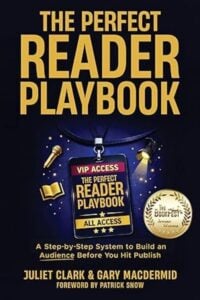
When we created The Perfect Reader Playbook, we did it around this change. Also, if you listen to our panel back in March, Adanna Moriarty and Kathleen Kaiser created a program that also works with these changes with Amazon as well. There are a lot of companies out there that just do not know what is going on, and they are still using bestseller campaigns. Bestseller campaigns are not the way to go anymore.
That is because Amazon is playing a long game, and that little spike at the beginning does not work in your favor anymore. We are going to be talking about the way content feeds the Amazon algorithm. The algorithm changes that happened were not just about keywords. They were not just about ads. They were about organic traffic and the massive wake-up call about content.
If you have been following my podcast for years, you know that we have been talking for years about the author platform. That is what this is all about. Where your leads are coming from. Amazon is Big Brother. It knows where every single referral comes from. It can tell if it comes from a piece of content. It can tell if it comes from an email list. It can tell if it comes from a podcast guest or a podcast.
This is why we have encouraged a lot of our clients to start podcasts and run their book as an ad in their podcast. It is an actual call to action from an ad. The books and the authors that are winning right now are the ones that are using their content strategically, driving qualified traffic, and deepening engagement. That is going to train what is called the A10.
The authors winning today are the ones using content strategically to drive qualified traffic and deepen engagement. Share on XThat is the AI that Amazon is using to favor its listings. When you understand how to connect your content ecosystem to Amazon’s three big levers, the organic reach, organic engagement, and external traffic, you will stop hoping that the algorithm will notice you and start giving it reasons to actually notice you. That is what we all do. We put our book up there.
We pay for a campaign of some sort, and we hope it is going to work, and we hope people are going to buy. If you have been building that author platform, they will buy because you have built an audience and you have layered over time and trained them to understand that you have the solution to their problem. Let us go through this. If we are going to do this, let us do it in steps.
Step One: Aligning Content To Boost Organic Reach
Step one. Use content to boost your organic reach. That means the free visibility that Amazon gives you in searches, in categories, and in recommendation carousels. You cannot control where you appear directly, but you can influence it, and the influences signal the A10 AI to decide whether you deserve more shelf space. Basically, it is just like in a regular bookstore, you are competing for shelf space, even though it is a digital shelf instead of a physical shelf.
Here are some things that can really support that reach. First, product page copy. Make sure it matches your search intent. Your title, your subtitle, and your description should use the same language your content uses off the platform. What is the language that is used in your blog post? What about your podcast titles? What about your social media hooks? Readers find those ideas, and they find you.
That is the first thing. Make sure everything is in alignment. Your brand is in alignment, and everything works the same way. You have probably noticed that if you are an author with many books, Amazon has gotten really fussy about when the book comes in from Ingram, so that it matches the ebook description. It matches the audiobook description. If they do not all match perfectly, if you have not written the title and everything in the same way, it is not going to match up automatically.
Using A plus content to tell a visual story helps. Branded modules, comparison charts, and images that mirror your broader content, such as frameworks, models, characters, and words, help Amazon see that you have a cohesive, high-quality brand and high-quality author platform. You should be using A-plus content. Use FAQs pulled from your audience’s questions.
The questions you answer in your blogs, in your emails, and in your videos should be echoed in your FAQ section to signal relevance and reduce shopper friction. Whatever those FAQs are, be sure you add them in. I know this sounds like a lot, but you are really positioning yourself as a brand here. The brand should be where you started before you started building your platform, before you started writing one word.
Off-Amazon content that indirectly boosts your search, blog posts that are targeting the same phrases as your book’s keywords, all linking together on that Amazon page, and podcast episodes built around your book’s core problems or themes with clear show note links to Amazon, all help. If you are a guest, maybe ask if you can have a little bit more input into those show notes. Sometimes that can feel a little sketchy because we do not want to put our host off. Doing that and having your own podcast definitely adds to that.
If you do not know, the podcast platforms are getting ready, especially Apple, to add videos. You may be able to add your video to your podcast platform as well as your YouTube channel. Social content also matters. Do you have reels? Do you have carousels? Do you have threads? Do they all use the same phrases? What is on Apple? Is it identical to what you put over on YouTube? What are those keywords you are using in all those places? All this matters.
Step Two: Designing Content For Organic Engagement
Using your subtitle and using your title pretty much everywhere is going to boost that Amazon reach. Design your content. I would say that is step two. Now that you know what you need to do, start designing your content for organic engagement, not just clicks. What does that mean? That means engagement is how readers behave once Amazon puts your book in front of them.
Design your content for organic engagement, not just clicks. Share on XDo they click, do they read, do they buy? This is buyer behavior as well. This is one of the things that I talked about last time. Do they bounce? Do they click, do they read, do they buy, or do they bounce? What do they do here? This buyer engagement is important because in the last episode, I talked about these book club scams that are out there, where you get all of these reviews, but they are unverified reviews.
They are not using the language in their book, and it is pretty obvious that they are not actual reviewers on there. You want to be able to use content that improves click-through rates, so that is your CTR. Have consistent visual branding. Use the same or similar imagery, fonts, and color palettes as your content that you use for your book cover and your A-plus content.
People instantly recognize your search results on there. That is really important. That is your brand. You should be doing that anyway. Repeated hooks and promises help. The big idea in your post and the big idea in your episodes or videos should match your subtitle promise. When they see the same promise on Amazon, it fuels it like the natural next step. They recognize you, they see you, and they click.
The buyer behavior goes from there. Use content that improves your conversion rate. This is your CVR. Authority-building content, such as having case studies and success stories, helps. If you go over to my LinkedIn, I have about 35 to 40 testimonials over there. They can tell they are real because they can go back and track them through the LinkedIn platform and see who wrote them, whether they were clients, and what kind of testimonials they were.
The behind-the-scenes work is important. Talk about what you do behind the scenes, the research you do, and how you work with your staff. The My Framework pieces make your Amazon description and reviews more believable because readers have already seen proof of your content. One of the things we talked about in the last episode was those book scans. I read two large ones this morning.
In reviews, “I produced that book, I published that book.” They really did not have a lot to do with the book. In fact, it was funny because as I was reading them, I was thinking, “That sounds like somebody else’s book.” Another client of mine is more into the medical community. Use objection-busting content, such as blog posts, emails, and short videos that address specific fears. I have tried other marketing books.
I do not have time for this. That is one of the objections we get all the time with author platforms. We have a building, so we have no problem putting it in our content that if you do not have time, do not write the book because you are not going to get anywhere without that author platform. Put in that objection-busting material that supports your case studies and supports what you are doing. That could be as simple as, what is the cost of you not doing this today?
The cost might be that you put out $25,000 to publish a book that nobody reads because you did not do the first part of what needs to be done through marketing. Have content that supports the reviews and post-purchase signals. Use reading guides, checklists, and mini workbooks that you can give buyers in exchange for joining your list. Have that lead magnet. We encourage you to have a lead magnet before you even have content.
That is the call to action you put on every piece of content. Use implementation content like how-to videos, live Q&As, and bonus chapters that help people use your book in a more cohesive way. That might be a journal that is with it, or maybe somebody can go to your site and they can download an ebook journal that they can go through and journal as they are going through your book, how-to, or notes about your book. All of those make Amazon traffic work harder for you.

When shoppers who already trust you see your listing, they are far more likely to click, stay, and buy. That is what you want. The clicks often tell you that when they do not buy. We see this with Promocast all the time. Author Promocast was one of the things that we designed just for authors to drive more traffic to their books. It is ads that are inside everyday apps, the bigger apps that are out there.
We see a lot when the self-published authors come back, and we can show them they got 400 clicks. How many buys did you get? They will say they got ten buys. If 400 people clicked and 10 people bought, we need to go back and look and see what is going on. We look at either that audience or what is going on with that book. Do you have the right metadata? Is your cover attractive? What does your back cover copy look like?
I talked to someone on Monday of this week who was self-published and had his hands up. He was like, “What do I do? Nobody is buying the book?” I looked at the cover. The cover was not attractive. The back cover copy was not really written like copy. Those are the types of things that people notice right away.
Remember that the book cover is your first impression. If it is not up to date or people do not understand it, it may not be eye-catching. We have an author who actually had a beautiful cover that she brought us, which was done by AI. We had to modify it a little. It still came out really nice, but when AI did it, it put 135 layers in there.
Step Three: Leveraging External Traffic As A Ranking Engine
You cannot do that if you are a designer. It is going to cost tens of thousands of dollars to design a cover. We got close, and it was very attractive. How do you turn your external traffic into Amazon in a way that actually rewards it? This would be your step three. External traffic is where the content really becomes a ranking engine for you. Amazon is explicitly rewarding listings that bring in buyers from the outside.
That means that your CTA on a high-content blog post should be effective. Have your articles SEO optimized around your book’s topic with clear calls to action. “Get the full framework in the book on Amazon” would be a great example, and then provide the link. Podcast content, such as solo episodes that break down one chapter at a time, helps.
We have a book right now by Christine Silverstein, and that is exactly what she did. A limited series podcast that goes through the chapters of her book. Another author interviewed her about every chapter of her book. She will have twelve episodes out there. She also wrote that book in Arabic and had it translated. We will be doing that limited series in a podcast as well in Arabic.

That is something that is really exciting now, too, since Amazon has added Arabic books to its repertoire. I will tell you from a publishing standpoint, it is a little bit difficult because everything is backwards. Luckily, when we did this book, we had a lot of help from our client’s husband, who reads Jewish Hebrew books. He was a little bit more familiar with that backward concept. Video content also works.
Make sure that you have micro lessons and shorts. Shorts are so fun to make. Especially if you are a podcaster who is using video, you can just run that episode right through Opus and get some really good clips to promote with. You can put your CTA for the book there. Take those live breakdowns, take some case studies, and Q&A clips, and make them pinned content.
Have descriptions and point to your Amazon page. Social content is key. Become a serial poster. That does not mean that you are an influencer. Quite frankly, I think the whole influencer thing is silly for the people who make money that way. I know a lot of people look at them and think, “That is so easy.” No, it is not easy. There is a lot of content that has to be produced. It actually is a very difficult job. Have thread content, a story art.
Use our carousels and our story art. Use transformational teases in all of this. Use your book as the point where people can go and get more of this stuff. Have that link there as your call to action on every piece. The key here is intent. When your content warms people up around a specific problem, remember that is what the Perfect Reader Playbook is all about moving from the unaware phase to the problem phase to the solution phase. You are telling people and showing people that “Here are the symptoms of this problem. I have a solution. It is a book, product, program, or service.”
The key is intent. When your content speaks to a specific problem, you help people recognize the symptoms and see that you have a solution. Share on XStep Four: Constructing Intentional Content Funnels
You are actually following The Perfect Reader Playbook guidelines for all of this Amazon algorithm that is new. Step four, build content funnels, not just one-off posts. Most authors will create content like a LinkedIn newsletter once a week. That is it. A random blog or a social post here and there is not enough. You have to be consistent. Amazon is looking for consistency. Build your content as intentional funnels that lead into Amazon. Have that weekly blog post. Have that weekly podcast. Have that weekly YouTube.
We have all three because of the way our podcast is set up. We do audio, we do video, and then it is written into an article. We have some of it as a blog. The content runs into Amazon. Be sure to do that with all of these. Send that link to buy the book. That is where these referral CTAs are going to get you more visibility there.
Social posts pulling one or two key insights from every piece create curiosity. Have that. Have a lead magnet. I do not even say have a lead magnet. We usually produce three to four a year because different things are going to entice different people. That goes back to The Perfect Reader Playbook as well. Each of those five stages has a different way to engage your audience. Have a lead magnet at every single stage, so you are engaging people in a different way.
Again, make that CTA your book or your Amazon author page, something that goes into Amazon. Use a short email sequence. If you are putting together a lead magnet, you probably have a drip campaign behind it. Make the CTA your book every time or most of the time in that drip campaign. We always suggest that you put a PS at the end.
Step Five: The Power Of Repurposing Across Channels
PS, have you subscribed to our LinkedIn newsletter? PS, are you following us on Instagram? PS, have you bought our new book? Always have places in that PS where people can find you. Step five. Repurpose. That is the great thing about content is you can repurpose it across multiple channels. I just mentioned what we do. We record this podcast in audio.
Great content can be repurposed across multiple channels. Share on XIt is for all of the audio platforms. It is in a video, and we have it on YouTube. We break it up into Opus clips. We have a blog written. We have articles in our magazine. We have articles in other people’s magazines from it. We are repurposing it over and over. Take that long-form post or that podcast and break it up. Make it a multi-channel promotion for your book.
Step Six: Analyzing Metrics To Refine Your Strategy
All of those multi-channel feeds back into Amazon. Each one posts right back into Amazon using the same central language that you have been using all along. Over time, this consistent content-driven demand is going to start catching the eye of the Amazon AI. Step six. Measure what content the algorithm likes so you can do more of it.
This is a big moment of contention with me and so many people. I am guilty of this sometimes, too. I do not look at my analytics. I should be doing, and you should be doing, more of what people like. If you are doing social media posts and you are finding that you are getting more engagement with a certain post, that is the time you start doing more of those posts.
I want to invite you all to go over to our site. We have a free webinar you can download and work with at your own pace this whole month of May. You can find it at PerfectReaderPlaybookWebinar.com, and you can see how The Perfect Reader Playbook really helps all of this develop over time. I will see you. We are going to dive into this even more with another niche area.
Important Links
- Adanna Moriarty
- Kathleen Kaiser
- Christine Silverstein
- The Perfect Reader Playbook
- Perfect Reader Playbook Webinar
Love the show? Subscribe, rate, review, and share!
- superbrandpublishing.com
- Promote, Profit, Publish on YouTube
- Follow Juliet on LinkedIn
- Take the Quiz!